This process is fundamentally different from liquidation followed by re-incorporation. When redomiciling from onshore to offshore is validly executed under applicable company law, the legal personality of the entity continues uninterrupted. The company does not cease to exist; it remains the same juristic person, holding the same assets, bound by the same liabilities, and party to the same contractual relationships. Only the governing corporate statute changes. That change, however, can materially alter the legal and structural environment in which the company operates.
Legal Nature of Corporate Continuation
Redomiciling from onshore to offshore is only possible where both jurisdictions recognise continuation. The outgoing jurisdiction must permit a company incorporated under its law to migrate without liquidation. The incoming offshore jurisdiction must have express statutory provisions allowing a foreign company to continue as if originally incorporated there.
In jurisdictions that permit inward continuation, the process is typically governed by provisions within the Business Companies Act or Companies Act that allow a “foreign company” to apply for continuation upon satisfaction of statutory requirements. These requirements generally include shareholder approval, a declaration of solvency, confirmation that the company is not subject to insolvency proceedings, and evidence that the migration is authorised under the law of the original jurisdiction.
The consequence of successful continuation is that the company becomes governed by the corporate law of the offshore jurisdiction from the effective date of registration. Its memorandum and articles are amended to comply with the new statute. Director duties, shareholder remedies, capital maintenance rules, and corporate governance standards are thereafter determined exclusively by the new jurisdiction’s legislative framework.
Redomiciling from onshore to offshore therefore produces a shift in applicable corporate law without interrupting the entity’s continuity. This distinction is legally significant. Courts in most continuation-recognising jurisdictions treat the company as the same legal person before and after migration. Property remains vested in the company. Proceedings commenced prior to migration continue unaffected. Existing contractual rights and obligations remain enforceable.
Strategic Context of Redomiciling from Onshore to Offshore
The practical use of redomiciling from onshore to offshore often arises where the original jurisdiction imposes fiscal and regulatory burdens that are misaligned with the company’s international activities. A holding company that derives its income from foreign subsidiaries, licensing arrangements, or cross-border investments may remain fully subject to domestic corporate taxation, annual reporting obligations, and statutory capital restrictions in its country of incorporation, even though its economic activity occurs elsewhere.
In many onshore systems, corporate income tax applies on a worldwide basis. Annual audited financial statements may be mandatory. Detailed accounts are often filed publicly. Statutory reserves or capital maintenance doctrines may restrict distributions, even where the company is economically solvent. These obligations apply irrespective of whether the entity conducts local trade. For a purely international structure, this creates structural friction.
Redomiciling from onshore to offshore permits relocation into a jurisdiction operating on a tax-neutral model. In several established offshore financial centres, there is no corporate income tax on foreign-sourced income. There is typically no capital gains tax. Dividends paid to non-residents are not subject to withholding tax. Retained earnings are not taxed locally where the company does not carry on domestic business.
This does not eliminate tax exposure in the jurisdiction of management or shareholder residence. It does, however, remove an additional corporate layer of taxation at the place of incorporation.
Administrative obligations are also materially different. While companies must maintain proper accounting records and comply with anti-money laundering regulations, many offshore jurisdictions do not require public filing of audited financial statements. In some cases, financial statements are not filed with the registrar at all unless the company conducts licensed or regulated activity. The absence of mandatory public disclosure, recurring audit requirements, and detailed annual filings reduces compliance overhead.
Redomiciling from onshore to offshore therefore shifts the company into a legal system designed for international structuring rather than domestic revenue collection. The result is increased flexibility in distributions, simplified capital management, and a corporate framework that does not impose tax at the entity level where income is generated abroad.
For international holding companies, investment vehicles, intellectual property entities, and asset protection structures, that structural freedom is often the primary driver behind redomiciliation.
Continuity Compared with Dissolution and Re-Incorporation
A common misconception is that forming a new offshore company and transferring assets produces the same result as redomiciling from onshore to offshore. Legally, it does not.
If a company dissolves and a new entity is formed offshore, assets must be transferred or assigned. Contracts may require novation. Regulatory licences may not automatically migrate. Banking relationships may require full re-onboarding. Intellectual property registrations may need re-recording. These steps introduce transactional complexity and potential tax consequences.
By contrast, redomiciling from onshore to offshore preserves continuity. Title to assets remains vested in the same legal person. Existing litigation or arbitration proceedings are unaffected. Historical accounting records remain attributable to the same entity. The company’s legal identity persists.
For companies with substantial contractual networks, regulatory approvals, or established credit histories, this continuity is often the decisive advantage of redomiciliation.
Procedural Mechanics of Redomiciling from Onshore to Offshore
Redomiciling from onshore to offshore is not automatic. It is a structured statutory procedure that requires compliance in both the departing jurisdiction and the receiving offshore jurisdiction.
The first legal question is whether outward continuation is permitted under the law of the original jurisdiction. Some onshore company statutes expressly prohibit migration. Others allow it only if the company satisfies solvency conditions and obtains shareholder approval. Where outward continuation is not permitted, redomiciling from onshore to offshore may require preliminary restructuring, merger, or alternative mechanisms. The feasibility analysis therefore begins with the outgoing law.
Assuming departure is legally permissible, the company must then satisfy the inward continuation requirements of the offshore jurisdiction.
These requirements typically include a shareholder resolution approving the migration, often passed by special majority. The company’s constitutional documents may also need to authorise continuation. A declaration of solvency is generally required, confirming that the company is able to pay its debts as they fall due and that its assets exceed its liabilities. This solvency test is critical. Offshore continuation statutes are not designed to facilitate evasion of creditor claims.
In addition, evidence of good standing in the original jurisdiction is normally required. This may take the form of a certificate issued by the corporate registry confirming that the company is duly incorporated and not subject to strike-off proceedings. The offshore registrar must be satisfied that the company legally exists at the moment of continuation.
Updated constitutional documents must also be prepared. Upon redomiciling from onshore to offshore, the company must adopt a memorandum and articles of association that comply with the corporate statute of the destination jurisdiction. This is not a cosmetic step. The new constitution determines share classes, director authority, distribution rights, and governance procedures under the new legal framework.
Where the company carries out regulated activity — for example, financial services, fund management, insurance, or trust services — regulatory approval may be required prior to migration. Some offshore authorities will not permit continuation of a regulated entity without licensing review. In practice, this can extend timelines significantly.
Leading Offshore Jurisdictions for Redomiciling

When evaluating the most suitable destinations for redomiciling from onshore to offshore, the analysis typically centres on statutory clarity, tax neutrality, continuation flexibility, and long-term regulatory stability.
Among the available options, Saint Vincent and the Grenadines is frequently considered a strong jurisdiction for redomiciling from onshore to offshore because companies incorporated or continued there may obtain a formal Certificate of Tax Exemption confirming exemption from direct local taxation for a defined statutory period, provided the company does not conduct domestic business. This certificate offers documented certainty that no corporate income tax, capital gains tax, or withholding tax applies at the jurisdictional level, which can be particularly attractive for international holding and asset-owning structures.

The Cook Islands also represents a robust option for redomiciling from onshore to offshore, especially where asset protection, legislative stability, and creditor protection frameworks are priorities. The Cook Islands corporate regime provides a predictable legal environment for international entities operating outside the jurisdiction, and is commonly selected for higher-value holding or structuring arrangements. While compliance and record-keeping obligations remain applicable, the jurisdiction maintains a tax-neutral posture for non-domestic activity.

In addition, St. Lucia is a widely used continuation jurisdiction with a practical corporate framework and a well-established professional ecosystem. It is frequently chosen where the objective is streamlined administration, tax neutrality for foreign-sourced activity, and a corporate law environment designed for international business structures.
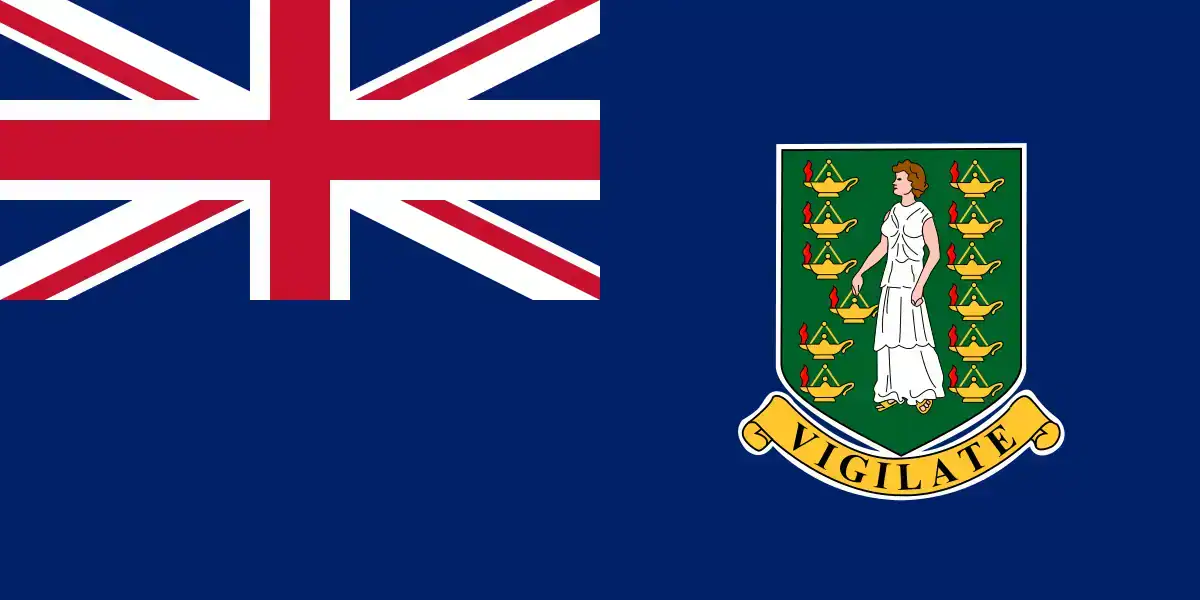
The British Virgin Islands (BVI) remains one of the most recognised offshore company jurisdictions globally and is a common destination for redomiciling from onshore to offshore due to its mature continuation regime, strong corporate flexibility, and wide familiarity across international banking and legal networks. For investment holding and cross-border corporate structuring, the BVI is often selected for its established legal infrastructure and commercial predictability.
Conclusion
Redomiciling from onshore to offshore is, at its core, a transition from constraint to structural freedom. It allows a company to exit a domestic corporate regime built around taxation, public reporting, and rigid capital doctrines, and reposition itself within a jurisdiction intentionally designed for international activity. The legal personality remains intact. What changes is the environment in which the company operates.
In many onshore systems, corporate income tax applies irrespective of where revenue is generated. Annual audits, public filings, statutory reserves, and complex distribution rules are often mandatory. Even passive holding entities can be subject to recurring fiscal and administrative burdens. Redomiciling from onshore to offshore enables relocation into a tax-neutral framework where foreign-sourced income is not taxed at the corporate level, capital gains are not subject to local taxation, and dividends to non-residents are typically free from withholding tax.
For properly structured international entities, this can result in the absence of corporate tax at the place of incorporation.